

.svg)
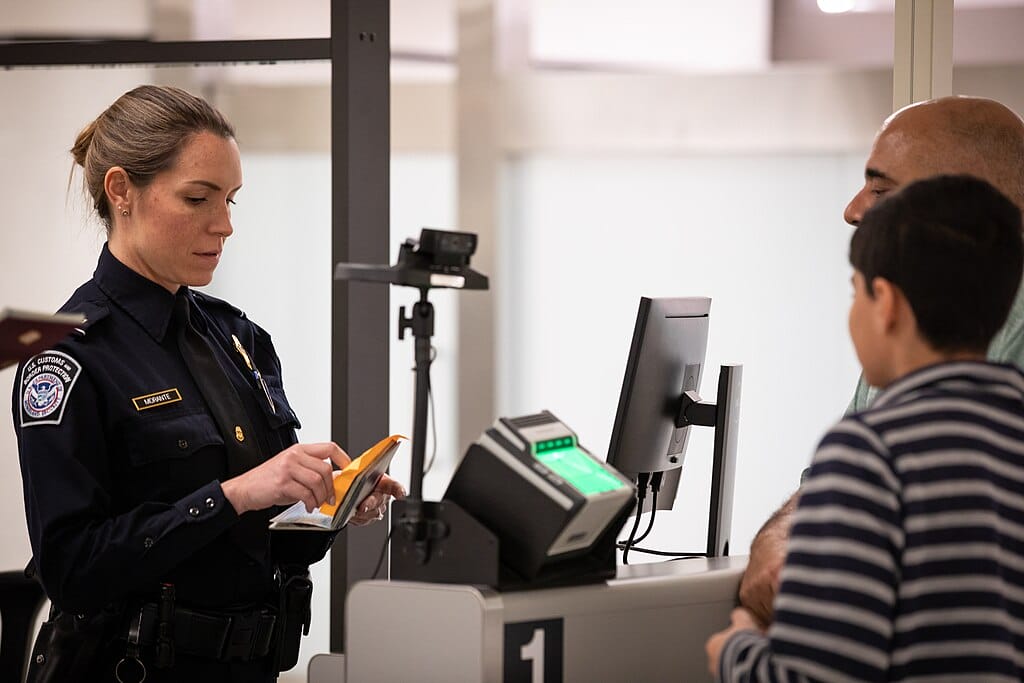
When entering or reentering the United States by land, sea, or air, all travelers — whether U.S. citizens, green card holders, visa holders, tourists, or refugees — must undergo inspection by U.S. Customs and Border Protection (CBP) officers at ports of entry. In this article, we’ll break down the common questions asked during a customs interview and how to prepare for them.
Purpose of Questioning at Ports of Entry
CBP officers conduct inspections at U.S. ports of entry to safeguard national security and public safety, ensuring compliance with U.S. laws and regulations. This thorough screening helps maintain the integrity of U.S. borders and prevents potential threats.
The primary goals of interviews at ports of entry are to:
- Verify travelers’ identities and citizenship or immigration status.
- Confirm the legitimacy of travel purposes and adherence to visa conditions.
- Prevent the entry of individuals who may pose security threats or violate U.S. laws.
Being well-prepared to answer CBP officers’ questions truthfully can expedite the inspection process, reduce delays, and minimize the likelihood of additional scrutiny or secondary inspection.
Common Questions Asked by CBP Officers
For All Travelers
Regardless of your immigration status, CBP officers are likely to ask you some standard questions, including:
- “Where do you live?”
Provide your city, state (if applicable), and country of permanent residence. You may also offer your street address. - “What is the purpose of your travel to the United States?”
Clearly state your reason, such as tourism, business, education, visiting family, or returning home. - “Are you traveling alone or with others?”
Officers may ask this to understand your travel context and identify inconsistencies in group declarations. - “How long do you plan to stay in the U.S.?”
Provide specific dates or duration. - “Where will you be staying?”
Share the location and address or name of your hotel or residence. - “Who will you be visiting during your visit?”
Offer the names of the people you will be seeing and your relationship to them. - “Have you traveled to any other countries recently?”
Officers may inquire about recent travel, particularly if there are health or security concerns related to specific regions. - “Have you ever been arrested or convicted of a crime?”
Applicable to all travelers, particularly non-citizens. Criminal history may impact admissibility. - “Do you have anything to declare?”
This refers to items you’re bringing into the country that may be restricted, prohibited, or subject to duty such as large amounts of cash, food, alcohol, tobacco, agricultural products, or expensive goods. - “Are you carrying any food, plants, or animal products?”
This is part of the declaration process and may be asked separately if you’re traveling from agricultural regions.
For Legal Permanent Residents (Green Card Holders)
CBP officers may ask questions to confirm your continued eligibility for permanent residency and to ensure you haven’t abandoned your U.S. residence. Common questions include:
- “How long have you been outside the U.S.?”
Extended absences may raise concerns about abandonment of residency. Be prepared to explain long stays abroad. - “What was the purpose of your trip?”
Officers may ask whether the trip was temporary and for a specific purpose such as vacation, family care, or work. - “Do you have your green card with you?”
You must always present your valid permanent resident card (Form I-551) when reentering the U.S. - “Where is your primary residence?”
You may be asked to confirm that your permanent home is still in the U.S. and provide proof if needed. - “Have you worked outside the U.S.?”
Working abroad for extended periods may raise red flags. Be ready to explain employment circumstances.
For International Students (F-1, M-1, or J-1 Visa Holders)
International students are expected to comply with specific visa conditions tied to their academic programs. Common questions include:
- “Which school are you attending?”
Be ready to state the name of your school and the program you’re enrolled in. - “What is your major or course of study?”
Officers may ask about your academic focus to verify consistency with your visa type. - “Can you show your Form I-20?”
This is a required document issued by your school. Ensure it is signed and up to date. - “Do you have proof of SEVIS fee payment?”
Carry a copy of your SEVIS fee payment receipt when entering the U.S. for the first time. - “Are you returning to resume classes?”
If reentering during a school break, be prepared to show proof of enrollment such as a class schedule or letter from your institution.
For Employment Visa Holders (H-1B, L-1, O-1, etc.)
Employment-based visa holders are typically asked about their job roles, employer, and intent to follow visa conditions. Common questions include:
- “Who is your U.S. employer?”
Share your employer’s name and your job title. - “What will your job duties be?”
Briefly explain your role and responsibilities, particularly if it’s a first-time entry. - “Do you have your approved petition?”
Carry a copy of your approval notice and related documentation. - “Where will you be working?”
You may be asked for the worksite address or confirmation that you’re not employed outside of your petitioned location. - “What is the duration of your assignment?”
Officers may confirm the validity period of your visa and expected length of stay.
For Tourist and Business Visa Holders (B-1/B-2)
Visitors entering the U.S. on tourist or business visas must demonstrate that their visit is temporary and consistent with visa terms. Common questions include:
- “Have you visited the United States before?”
Officers may ask this to understand your travel history and whether you’ve complied with U.S. immigration rules on past visits. - “How often do you come to the United States?”
Frequent visits may prompt additional questions about your travel purpose and ties to your home country to rule out unauthorized long-term stays. - “What do you plan to do during your stay?”
Sea específico. Los turistas pueden mencionar hacer turismo o visitar a la familia; los viajeros de negocios pueden hacer referencia a reuniones o conferencias. - “¿Tiene un boleto de regreso?”
Tener un itinerario de ida y vuelta respalda su reclamo de una estadía a corto plazo. - “¿Cuál es tu ocupación en tu país de origen?”
Los oficiales de CBP pueden solicitarlo para evaluar sus vínculos con su país de residencia y asegurarse de su intención de regresar después de su visita a los Estados Unidos. - “¿Cómo financia su viaje?”
Es posible que deba mostrar evidencia de medios financieros para cubrir sus gastos. - “¿Tiene la intención de buscar trabajo o estudiar mientras esté en Estados Unidos?”
Estas actividades están prohibidas con una visa B-1/B-2. Responde claramente que tu visita es temporal.
Para refugiados y asiliados
Viajeros con refugiados o asile el estatus debe estar preparado para responder preguntas sobre su situación jurídica y detalles de viaje. Las preguntas comunes incluyen:
- “¿Tiene documentación que acredite su estatus?”
Trae tu Documento de viaje de refugiado y otros documentos oficiales que confirmen su estatus migratorio en los Estados Unidos. - “¿A dónde has estado viajando?”
Esté preparado para explicar los países que ha visitado, especialmente si ha viajado a su país de origen, lo que puede generar preocupaciones legales. - “¿Cuál es su dirección actual en Estados Unidos?”
Los oficiales pueden solicitar confirmar su lugar de residencia y verificar que coincida con los registros de inmigración. - “¿Regresas permanentemente?”
Se espera que los refugiados y asilados mantengan su residencia permanente en los Estados Unidos y no deben establecer su residencia en el extranjero.
{{tip-component-1}}
Consideraciones adicionales
- Esté preparado: Ten lista toda tu documentación, incluyendo tu pasaporte, visa y cualquier documento de respaldo.
- Responda con sinceración: Los oficiales de CBP están capacitados para detectar inconsistencias. Siempre brinde respuestas honestas y directas.
- Mantenga la calma: Recuerda que estas preguntas son rutinarias. Permanecer educado y sereno durante todo el proceso.
- Conozca sus derechos: Si bien CBP tiene amplia autoridad, usted todavía tiene derechos.
Línea de fondo
Ya sea que sea un ciudadano estadounidense que regresa a casa o un viajero internacional que visita los Estados Unidos por primera vez, prepararse para su entrevista de aduana puede marcar una gran diferencia. Comprender el propósito detrás del cuestionamiento de CBP y saber qué esperar asegura una experiencia de entrada más suave, más rápida y menos estresante. Al llegar con la documentación adecuada, responder preguntas con veracidad y mantenerse informado sobre sus derechos y responsabilidades, puede ingresar a los Estados Unidos con confianza y claridad.
{{cta-component-center-aligned}}
.svg)
Si teme la persecución en su país de origen y no puede o no quiere regresar, tiene derecho legal para solicitar asilo en un puerto de entrada de Estados Unidos, ya sea que esté llegando por aire, tierra o mar. Informe al oficial de CBP que tiene miedo de regresar a su país de origen y le gustaría solicitar asilo. Esto debería desencadenar un proceso formal, que puede incluir una entrevista de miedo creíble con un oficial de asilo. Es importante expresar claramente tu miedo a la persecución o al daño y ser honesto en tus respuestas. Si es posible, prepárese para presentar documentos justificativos o pruebas. No obstante, debido a la reciente administración Trump desafíos a las políticas de asilo de larga data, el asilo puede ser actualmente más difícil de lograr.
.png)

.png)

Related Articles



Start your journey
Get in contact with us to get a demo of Boundless and see how we can help you with your strategy to hire international talent.
.svg)
.avif)